Thursday, April 25, 2013

Filming Patch

Patch has been my first experience directing for film. It was also the first time that something I wrote was produced. So it was a big project and milestone for me. It has been a learning experience and quite a successful project.


I guess the first place to begin with reflection is at the writing aspect. A big problem I have with student writers is that they go too big. They're too ambitious, as if anyone thought there was such a thing, but there is. An attempt at emulating what Hollywood does is going to come off as just that: an emulation. Students must keep in mind what their capabilities are. We cannot have giant chase scenes or complicated shots. Our screenplays must rely on powerful dialogue that can be executed easily. We need to search out the core of humanity. It is at that core that we can most effectively operate. It puts us on the same playing field as the rest of the industry. No amount of fancy lights or tricky shots will make a real, poignant script into anything better than one that is filmed simply. It forces a writer to REALLY write, instead of relying on the technical aspects to carry the film. In my opinion, a good script must be completely able to stand on its own as an enticing work of art. It must be deep and multi-faceted. We cannot afford, as low-budget filmmakers, to skimp on what is ultimately the backbone of the film.

So this is what I set out to do: write a script that is moving, but simple. Small, but big, if that makes any sense. Some of the best films of all time were simple, but had such good scripts that they couldn't help but to become classics. Clerks comes to mind. Family dynamic is something that interests me. I'm constantly exploring it in scenes, plays, and in my studies. When I decided on basing my script off of The Great Red Dragon and the Woman Clothed by the Sun, I was hit with this suspenseful story of the strength of a brother bond in the midst of betrayal. And not to harp on student writers, but SUBTEXT people! I can't stand a script where the characters say exactly what they're thinking. That was another thing that spurred the ideas that became Patch. I wanted to write something where the words didn't matter; that the words only served to act as a conduit to get emotions across. Blake is too closed off to ask for Will's forgiveness, so he does it in a way where he doesn't have to say it. THAT is what communication is actually like. If Blake just came out of the bedroom and said, "Will, please forgive me." it would be BORING. End of film. But I strive for something better, something more.

I found after filming that my words had more meaning than I thought. I chose the title Patch simply because the dog figures so largely into the dialogue. But then, I thought about it. Much like the film Drive is about driving, it is just as much about the Driver's inner drive to do right by Irene. In Patch, Patch is the obvious namesake of the story, but doesn't it mean so much more? Blake and Will choose to put a patch over their relationship both at the time of Patch's death and during the events of the film. Whether knowingly or not, the brothers make the decision to put a patch over their issues time and again for the sake of their relationships. Patches are temporary, but Will and Blake will keep reapplying as necessary because what else do they have if they don't have each other? 


On directing, I was very lucky to get a wonderful cast. Walter and David are experts with their craft. They created and strived for an environment where we openly discussed the implications of the script. I think we were all very much on the same page and I am endlessly appreciative for their work. I would have loved to have my original Mary, Meagan Dyer, do the role, but sickness desired otherwise. She still graciously offered her home for us to film in, which I am extremely grateful for. Bobbie Renee took the role on within hours of the start of the shoot and I can't thank her enough. They say directing is 90% casting which means that 90% of my directing job was flawless.

Decisions had to be made and I am particularly proud of my ability to not become married to my script. Sometimes writers who direct their own shows can become too attached to their words. If something didn't work, it had to go. Nobody respects the guy who holds up filming because he can't find a solution that doesn't involve changing his beloved work of art. I've worked with that guy. He sucks.

All in all, it was a wonderful experience and a relaxing shoot. I had a great crew and cast and couldn't ask for anything more. <3

Django Unchained

Before the actual review starts, I have some wonderful news to report. As of the morning of February 24th, 2013, I have officially seen every 2012 nominee for Best Picture. Yes, that's a full eight hours or so before the start of the ceremony. I've been trying to do it for years and I finally succeeded. Feels good. Sure, I had to power through Django Unchained, Zero Dark Thirty, Amour, Life of Pi, and Beasts of the Southern Wild all in one weekend, but I can't say it wasn't worth it. I can confidently say that, having seen every one, this is one of the best sets of nominees I've seen in years. Sometimes there are a few nominees that make you wonder if they truly deserve the nomination (Toy Story 3, The Kids Are All Right, and Winter's Bone come to mind) but not here. Every single one of the nine was as deserving as all of the others. Sure, there were frontrunners, but every movie was top quality and that certainly includes Django Unchained.
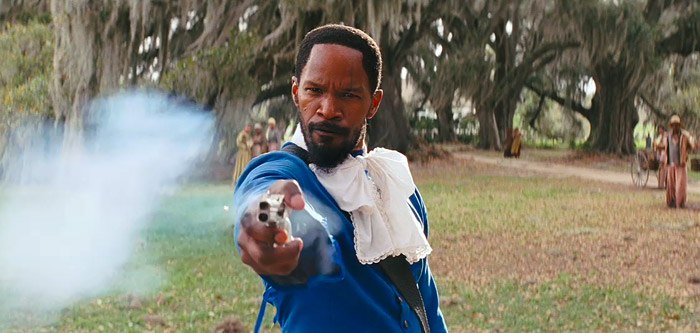
I love Tarantino. It's a new discovery as I've just now gotten around to watching his best movies so I without a single shred of doubt knew that I'd love Django Unchained. It was basically spoken of as a Deep South version of Inglourious Basterds, complete with a returning Christoph Waltz. Django Unchained is an original masterpiece about a slave named Django (Jamie Foxx) who is freed by a German bounty hunter named Dr. King Schultz (Waltz.) Django, as a condition of his freedom, agrees to help Schultz find a group of sadists named the Brittle Brothers who had abused Django and his wife Broomhilda (Kerry Washington) at his former plantation. The Brittles fall quickly and the two unlikely companions make a pact: Django will help Schultz hunt bad guys and Schultz will help Django find his wife who was sold off to a different slave owner. What follows is a beautiful sequence of acts that the duo put on in order to gain access to various plantations. Eventually, their travels lead them to Calvin Candie (Leonardo DiCaprio), a sadistic but classy owner of the plantation known as Candyland. Calvin owns Broomhilda and the two are forced to play ball with a true monster.
Jamie Foxx has been generally invisible since his stunning performance in Ray back in 2004. He's shown up in some good supporting roles and some fantastic bit comedy parts (Horrible Bosses comes to mind) but he hasn't really done a good lead part since Ray. Well, he's back (and unchained) Other rumored contenders for the part of Django included Will Smith and Michael K. Williams, but after seeing Foxx in the role, I can't imagine anyone else. He's got the right amount of badass action chops when they're needed, but he can also dial it down and show tenderness and emotion when needed. We excuse his gratuitous violence because his longing to be back with Broomhilda is so potent.
Christoph Waltz is so good in his role as Dr. King Schultz that were Foxx not as good as he is, the experience of this film would really be all about Schultz. Granted, the audiences still talk about Waltz the most, but Foxx's performance is powerful enough to keep us with him even when Waltz is not onscreen. Waltz' performance is very similar to his previous one in Inglourious Basterds as the ruthlessly sadistic Hans Landa, but there's one difference: Schultz is a good man without the need for sadism. It's a testament to Waltz's abilities as an actor that he can so effectively play unrestrained evil and likable humanity. Waltz is helped by Tarantino's extra tender loving care in writing Schultz's lines, but Waltz is the one who brings them to life. He's sure to be one of the most remembered and loved characters of any recent movie.
It's very uncharacteristic of his performances that Leonardo DiCaprio doesn't show up until about halfway through the movie (in fact, I'd heard that this is the first time that DiCaprio hasn't gotten top billing in a film in 16 years) But the wait is worth it. DiCaprio doesn't often play villains. He's an expert at the troubled protagonist role. I've never seen such unbridled evil from him before and he played it with complete commitment and honesty. DiCaprio has stated in interviews that he hated his character, but it doesn't show. He jives with the role perfectly and creates a role that is both charming and terrifying at the same time. Special mention must come from the fact that he cut his hand open mid-scene and never broke character. For an actor who hates his character, he's awfully good at staying in character. I'd love to see him play more roles like this.

Tarantino knows what works and one of those "things" is Samuel L. Jackson. Jackson plays a supporting role that appears shortly after DiCaprio. It's that of Calvin Candie's old slave, Stephen. He's a man bred into self-loathing racism by the Candie family. He's every bit as vindictive towards blacks as any other white slaveowner in the movie. Jackson plays the role beautifully, dually juggling "crotchety old man" and "foreboding villain." He is a true force onscreen and you never know what he's about to do. He's the wrench in the gears that threatens to destroy everything Django and Schultz have worked towards. Beyond his villainy, is an overwhelming sense of sadness and submission. For most of his screen time I was waiting for him to be the one who turns on Candie and allows the two men to succeed in their mission. I wanted Stephen to be unchained too. It's a result of Jackson's wonderful performance of having been made a racist, not born one. Kerry Washington was wonderful as Broomhilda as well. She plays every moment with the sort of unrelenting fear that plagued slaves constantly. Even before Candie unleashes his fury, Washington shows that she knows he's capable of it in every moment and line. Props to Washington for not freaking the hell out when DiCaprio smears real blood all over her face.
  
The true star of this film is Tarantino. No Tarantino film can exist without Tarantino. His dialogue style is essential to what works about his films. They may get gruesome, but there's always light conversation surrounding the mayhem. It's a beautiful juxtaposition. Tarantino not only understands the way dialogue works but he knows how to make it interesting, unique, and intensely quotable. Tarantino's filmmaking is always completely unapologetic, never flinching in the face of extreme violence, profanity, or even anachronism. It's true, Tarantino's films are rarely historically accurate. Stephen screams "Motherfucker!" almost fifty years before its first recorded use. But he doesn't do these things because he doesn't realize it. Tarantino makes a Tarantino movie and he's not going to let time or historical semantics get in the way. Plus, would it really be a Samuel L. Jackson performance without that word? Dynamite is also used as a plot device long before its invention. There's tons of these inconsistencies throughout, but it's Tarantino. If you want a historical film, go see Lincoln instead. Also, Tarantino, as per usual, cameos wonderfully towards the end of the film.
As it is a Tarantino film, it's of course got that classic Tarantino style. The best thing about Django Unchained, stylistically, is its music. Tarantino is a master at picking just the right music for a moment. Like his dynamite and motherfuckers, Quentin is not concerned with making a period piece when he picks his music. In a Deep South slavery story, Tarantino was able to include hip-hop, rock, oriental, and country music. He's concerned with telling a story, not catering to a perfect period piece. It makes for a better film because I, and likely many others, didn't go to see Django Unchained because they wanted a thought provoking piece about slavery and the social stage of the 1850s. No. We went to see the movie because it was a story worth seeing and anything Quentin can do to help that story resonate, he will do. His shots are wonderful and combine beautifully with the music. He's not bound to the laws of physics either. When a character is shot from above later on in the film, she flies backwards. It's ridiculous and noticeably so, but it's something to be respected. Tarantino makes Tarantino films and nobody can tell him how his world works. That's really what he's created: his own world. You know the movie is going to be typical Tarantino from the start with the beautifully shot opening of Django and his fellow slaves being marched across land to the tune of an original Western style song about Django himself.
Django Unchained,  in general, was a film that we'll be talking about for decades. It's fully engrossing, thought provoking, and beautifully crafted as we are used to Tarantino films being. It is filled with what good movies are made of. I can't do anything, but recommend this film.

See it For: Wonderful performances all around, undeniable style, and some killer tunes.
Quote of the Movie: "You sir are a sore loser."-- Calvin Candie "And you are an abysmal winner." -- Dr. King Schultz

Rating: 5/5

Friday, February 15, 2013

Subjective/Objective

I've always known that I'm drawn to certain characters. It takes a lot of thinking to identify all of them, but I'll try my best. I'm very character based so I'm sure a lot of this will be related to the sorts of characters involved, rather than themes.


Characters
The Intelligent Villain
Absolutely love this guy. Nothing draws me to a movie more than a truly interesting villain with a head on their shoulders.  It makes them formidable and ups the stakes tremendously. They're masterminds and the viewer has no idea how the protagonist will possibly overcome them. The actors who get hired for these roles are always top notch as well which surely affects how much I enjoy them.

- Silence of the Lambs (Hannibal Lecter)
- Hannibal (Hannibal Lecter and Mason Verger)
- Fracture (Ted Crawford)
- King Lear (Edmund)
- Dirty Harry (Scorpio)
- Batman Begins (Ra's al Ghul)
- Richard III (Richard III)
- The Dark Knight Rises (Bane)
- Les Miserables (Javert)
- 2001: A Space Odyssey (HAL 9000)
- Skyfall (Silva)
- Die Hard (Hans Gruber)
- Se7en (John Doe)
- Die Hard with a Vengeance (Simon Gruber)
- The Usual Suspects (Keyser Soze)
- One Flew Over the Cuckoo's Nest (Nurse Ratched)
- Breaking Bad (Gustavo Fring)
- Gangs of New York (Bill the Butcher)
- Wall Street (Gordon Gecko)
- The Merchant of Venice (Shylock)
- Speed (Howard Payne)
- Inglourious Basterds (Hans Landa)
- RoboCop (Clarence Boddicker)

The Psychotic Villain This goes hand-in-hand with the intelligent villain, although the psychos aren't always masterminds. Sometimes they're unhinged buckets of chaos, products of a society that abandoned them long ago. They're usually accompanied by tremendous amounts of pain or suffering which makes for a deep, sympathetic character. However, sometimes they have no emotion at all. So this group varies a lot, but I never cease to be mesmerized by them.They are the monsters under our bed. Only, they're not easily dismissed as a supernatural force. They're very real and usually based on real people, making them all the more terrifying. They make me feel terror more than any ghoul or zombie.

- The Silence of the Lambs (Hannibal Lecter and Jame "Buffalo Bill" Gumb)
- Red Dragon (Francis Dolarhyde and Hannibal Lecter)
- Gangs of New York (Bill the Butcher)
- No Country for Old Men (Anton Chigurh)
- The Dark Knight (The Joker)
- Batman Begins (Scarecrow)
- Breaking Bad (Tuco Salamanca, Hector Salamanca, and the Salamanca Cousins)
- The Shining (Jack Torrance)
- Schindler's List (Amon Goeth)
- A Clockwork Orange (Alex)
- American Psycho (Patrick Bateman)
- Cape Fear (Max Cady)
- Fargo (Gaear Grimsrud)
- There Will Be Blood (Daniel Plainview)
- Basic Instinct (Catherine Tramell)
- A Few Good Men (Nathan Jessup)
- The Girl with the Dragon Tattoo (Martin Vanger)

The Antihero I'm sure you're seeing a trend in my favorite characters: Villainy. It's not that I love criminals or killers or anything. Far from it, but there's something about the depth that these characters show when they're well written and well acted that draws me to them. The most disturbing and gripping villain is one that is the protagonist. Somehow, they're done in such a way that we invite ourselves along with them in their crimes. We're made into accomplices and no matter what they do, we still somehow achieve this warped sense of rationalization for their actions.

- Macbeth (Macbeth and Lady Macbeth)
- King Lear (King Lear)
- Richard III (Richard III)
- Breaking Bad (Walter White)
- A Clockwork Orange (Alex)
- There Will Be Blood (Daniel Plainview)
- American Psycho (Patrick Bateman)
- Taxi Driver (Travis Bickle)
- Dog Day Afternoon (Sonny Wortzik)
- Pulp Fiction (Jules Winnfield and Vincent Vega)
- First Blood (John Rambo)
- Hannibal (Hannibal Lecter)
- The Godfather Part II (Michael Corleone)

The Guy Who Isn't There I love any sort of entertainment that uses the motif of a ghost or a figment of imagination that can be seen by a limited amount of people. Whether it's for comedy or drama, the ghost throws in a very unique psychological aspect that is very powerful for me.

- Next to Normal (Gabe)
- Ghost Town (Frank and nearly every other character)
- Ghost (Sam Wheat)
- Jake's Women (All of the Female Characters)
- The Sixth Sense (Malcolm Crowe)
- Beetlejuice (Beetlejuice, Adam, and Barbara)
- The Shining (Delbert Grady)

The Quirky People This is more for comedies, but I'm drawn to the weird characters that say strange things. With female characters, this makes them incredibly attractive to me. The male characters are usually some of the most quotable people ever.

- The Big Lebowski (Donny)
- Fargo (Carl)
- Vanilla Sky (Sofia)
- Juno (Juno)
- The Office (Dwight Schrute, Andy Bernard, Creed Bratton, Michael Scott)
- It's Always Sunny in Philadelphia (Charlie Kelly)
- Anchorman (Brick)

Genre
The Perfect Mix This is what I refer to as the perfect mix of comedy and drama. It's my favorite sort of movie that blends comedy and drama together seamlessly. They're hilarious, but they have a strong realistic emotional core to them. There's something about being able to laugh and cry within minutes of each other that really makes something memorable for me.

- Little Miss Sunshine
- Crazy Stupid Love
- American Beauty
- Clerks
- Clerks 2
- Catch Me If You Can
- Man on the Moon
- The Truman Show
- Eternal Sunshine of the Spotless Mind
- Scrubs
- Away We Go
- Good Will Hunting
- Rain Man

Psycho Thrillers As is evident with my character list, I relish a good villain, but I'm not a huge fan of supernatural forces like Freddy Kruger or Jason Voorhees. No, the creatures that go bump in the night that terrify me are the ones who could be living right next door, under your nose. There's something chillingly possible about it all that sends shivers down my spine.

- Se7en
- The Silence of the Lambs
- Hannibal
- Red Dragon
- The Shining
- The Girl with the Dragon Tattoo
- Cape Fear
- No Country for Old Men
- Breaking Bad

Mind Manipulators I don't necessarily mean movies that feature manipulative characters but rather those sorts of films and TV shows that don't ever leave your brain. They take over and you think about them for days, weeks, and months. How can you not love a movie that infects your psyche?

- Eternal Sunshine of the Spotless Mind
- El Orfanato
- Breaking Bad
- Chinatown
- Pan's Labyrinth
- Vanilla Sky

Themes


Betrayal and Revenge Since villains are important to me, movies about betrayal and revenged intrigue me. There's always a bad guy and there's always a really clear quest to kill that bad guy. The traits of both protagonist and antagonist are always so well defined. The story is so clear and exciting that you can't help but to need to know the end. There's nothing more gratifying than when that villain is finally conquered.


- Django Unchained
- Kill Bill Vol. 1 & 2
- Braveheart
- Hamlet
- Gangs of  New York
- The Lion King
- Gladiator

Rebirth Most characters change in films. If they don't, you probably have a pretty bad film on your hands. However, when I say rebirth I mean the complete reinvention of the way a character does things. It's usually a conscious decision by the character to change the way they live, drastically.  Sometimes they're fighting against social norms and I love that. It's that moment when they declare, "I'm not going to take it anymore!" They don't do what's expected of them and as a result, the viewer doesn't know what to respect either. It's wonderful. It often includes a character who's miserable and finds happiness through rebellion.


- American Beauty
- Into the Wild
- Breaking Bad
- Office Space
- Lost in Translation
- Garden State


Friday, February 8, 2013

Bringing a Painting to Life: Treatment Edition

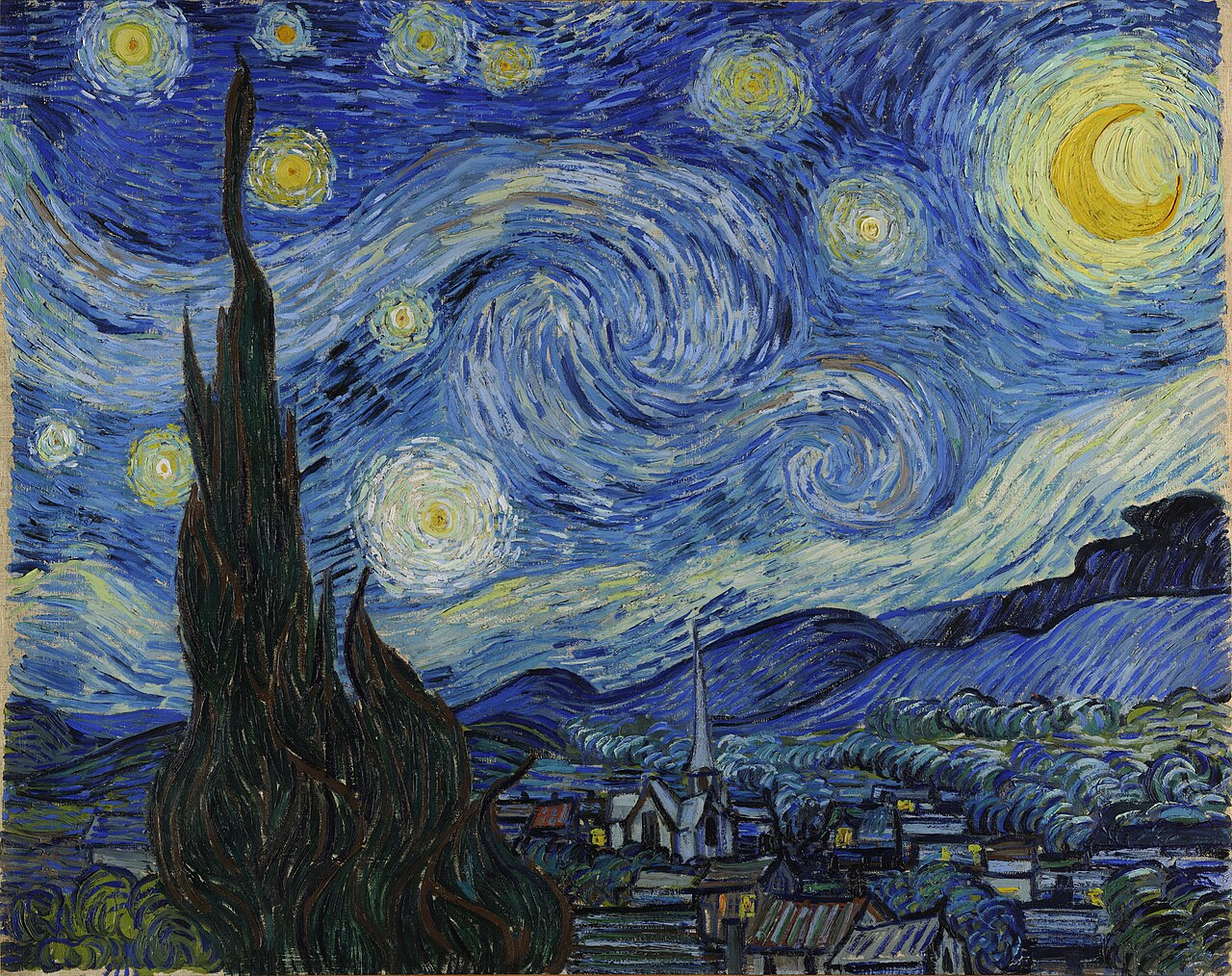
Art inspires. There's no question about that. It leads one to wonder: "How did the first work of art come about?" Well, that's actually pretty easy. Existing art isn't the ONLY inspiration for new art. There's sunsets and horizons and mountaintops and lovers and all that, but certainly since the dawn of artistry, old art has begot new art. How many people must have seen that ambiguous smile of Da Vinci's Mona Lisa and instantly went to pick up the nearest paintbrush? Or those melting clocks of Dali or Picasso's misshapen faces? Van Gogh's night sky of stars. Michelangelo's masterpiece, David. Bottom line: Art can set the imagination running wild.


So when tasked with writing a short screenplay inspired by a painting, bringing it to life, I thought about what paintings inspired me. Of course, I'm familiar with the famous ones, but one of my favorite paintings has always been The Great Red Dragon and the Woman Clothed by the Sun by William Blake. I suppose much of my enjoyment for the painting comes from the fact that it's heavily featured in one of my favorite films, Red Dragon, but I also have a fondness for the painting that goes beyond my love for the film. There's something about the image of that powerful deformed monster standing over that bright shining woman that clicks something inside my brain. The dragon of the painting is actually featured in several of Blake's paintings, but I chose to go with that one that's most familiar with me. The great thing about the Blake Dragon paintings is that I can never quite tell if the woman is terrified of the monster or in awe of him. It's that ambiguity that lights a spark.


So without further ado, I present my proposal and treatment for this film.

Logline: Two brothers come face to face after one betrays the other.

Treatment:

A man and a woman lie in bed together, post-sex. She's married, but not to him; to his brother. They talk a bit, pillow talk, before they hear a door slam in the house. They jump up and begin to dress. She tries to sneak him out the window. Too late. Her husband, Drake, an intimidating police officer busts through the door. He grabs his brother and forces him to the ground, knocking him out. Drake drags the woman out of the bed and she falls to the ground, taking a lamp with her. The lamp illuminates her while he stands over her brandishing a nightstick

Drake's brother wakes up, cuffed to the kitchen table. He tries to break free, but can't. He hears the woman screaming then she abruptly stops. Drake appears in the kitchen, grabs two beers from the fridge. He sets them on the table and sits across from his brother who instantly begins to inquire if the woman is dead. Instead of answering the question, Drake brings up a time in their childhood when Drake caused the death of the brother's puppy. He confesses that he let the dog go on purpose and also reveals that he's always been aware that his brother knew it wasn't an accident, but that he remained his brother anyway. He moralizes that brothers stay together, no matter what. Forgiveness is always possible.

The brother takes this in, but once again asks about Drake's wife. Drake sets him free and allows him to walk back into the bedroom. We see the brother enter, but we only see his reaction of shock, never an actual shot of the woman. She may be alive, brutalized, or dead. We'll never know.

Relation to the Painting:

Instead of actually incorporating the painting directly into the film,  I wanted to make use of the image of a powerful dark figure standing over a helpless figure of light. It's that moment where he is standing over her (and the reason for the fall of the lamp) that illustrates this. I took that image and let the story grow around it. I enjoy the themes of betrayal, forgiveness, and confession that go along with the story. I'm also a huge fan of the suspense principle that the human mind will do much more terrible things to people in dire situations if we don't show the gore of it all than the best Hollywood blood and guts could ever do. I always go for showing a person's reaction to horror rather than the horror itself. The ambiguous ending plays with the mind. Does Drake talk of brothers forgiving each other because he's showing his forgiving nature and therefore has spared his wife? Or is his talk of forgiveness a plea for forgiveness for what he has just done? I leave every aspect of the story up to the audience.


Monday, February 4, 2013

Silver Linings Playbook

 Okay. I know. Not a nemesis film either. I suppose this is why I've gone so long without seeing these films. Every time I make a point to see Scarface or Gone with the Wind or Raging Bull, I get distracted and watch something else. But give me a break! It's awards season, and I may be breaking my nemesis film promise, but there's another promise I make every year and I break it every year. That is the promise I make to myself (and to my other movie buff friends) that I will see every single Best Picture nominee prior to the actual award ceremony. For the 2010 ceremonies, I made it to about 6 out of 10. I happened to choose every single one that won barely anything: Winter's Bone, The Kids Are All Right, 127 Hours, Inception, Toy Story 3, and True Grit. And that was a good year. Last year, 2011, I made it to an astounding ONE (Extremely Loud and Incredibly Close.) It's pathetic and I'm sick of breaking this promise to myself.
Luckily, this year, I've got exactly 20 days from writing this to see 5 movies: Amour, Beasts of the Southern Wild, Django Unchained, Life of Pi, and Zero Dark Thirty. It's not too tall of an order, considering all five of the movies sound tremendous. Yesterday, the count was six, but a nominee has fallen to my viewing. And that film is Silver Linings Playbook directed by David O. Russell and starring Bradley Cooper and Jennifer Lawrence. 2011's Sexiest Man Alive (a title I detest for not being given to Ryan Gosling) and the Hunger Games dynamo are supported by screen legend Robert DeNiro and Australian film actress Jacki Weaver. Notable small roles are filled by the always funny Chris Tucker and go-to cranky woman Julia Stiles. It's a cast to be reckoned with and the Academy agrees, having nominated Cooper, Lawrence, DeNiro, and Weaver in all four of the acting categories which hasn't happened since Reds in 1981.


So what story deems such tremendous talent necessary? Pat Solitano, Jr. (Cooper) is released to his mother (Weaver) from a mental hospital, eight months since he went berserk and bludgeoned his wife's co-worker after catching them in the shower together. Pat is determined, positive attitude of finding silver linings in hand, to win his wife, Nikki, back. It's almost instantly apparent to the viewer that she doesn't intend on coming back. She's got a restraining order, but Pat remains hopeful. Life is rocky back at the Solitano home where Pat is prone to outbursts (some involving Pat and Nikki's wedding song which acts as a trigger to his rage) and Pat is constantly taking his issues out on his loving mother and similarly angry father, Pat Solitano, Sr. (DeNiro) It seems as if Pat could be heading back to his Baltimore hospital pretty soon if he doesn't shape up, as we see the officer assigned to his case more than we should. Things begin to change (not always for the better) when Pat is introduced to the sister of a friend's wife, Tiffany Maxwell (Lawrence) Tiffany is having troubles of her own as her husband's death has brought on an alarming bout of promiscuity. Pat and Tiffany connect through their shared troubles and begin to fall for each other. It's a love story, but there's a lot more to it than that. It's about hurt, and pain, and mental health and overcoming hardships.
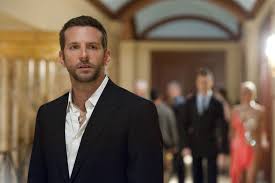
Since this movie managed to nab four acting award nominations in four different categories, we must ask ourselves: does it deserve all four? I must admit, I don't particularly like Bradley Cooper. He feels like the weak link in The Hangover films. Looking at his credits, I see that he was in Yes Man. I don't remember him. He was fine in Wedding Crashers, but he basically plays a big jerk in that and The Hangover films. Jerks are fine as supporting characters and antagonist, but walking into a film where the jerk actor is the protagonist makes me nervous. Make no mistake, Pat Solitano is a bit of a jerk. Yes, he has his mental illness to account for, but that can't excuse all of his behavior. Still though, Cooper plays it in such a way where the viewer can see that Pat's antics are borne out of his insecurities and life experience and delusions. It is the way he plays his delusions so truthfully that causes the audience to fall for him.

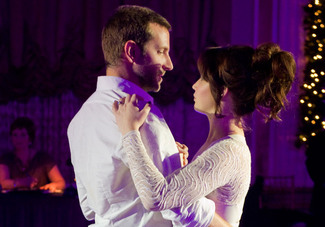
We may not all have mental illness, but we've all at least taken day trips to Delusion Land with some, including myself, having held delusions similar to Pat's. We've all felt that sense of "No. It's not over. She's coming back. She still loves me." And for that moment, that is the truth. All of our friends know we're wrong and eventually we come to know it too. We are Pat's friends. We want so badly for him to move on that despite his crassness and outbursts, we root for him. And that's all that's needed to make a good protagonist: our blessings. Cooper shows tremendous (and surprising) dramatic chops in this film. I call this "the Hathaway moment." It's that moment (named for Anne Hathaway on account of her stunning performance as Fantine in Les Miserables this winter) when I begin to take actors seriously whom I didn't necessarily enjoy before. It's the difference between me refusing to see your movie or pre-ordering a midnight premiere ticket to whatever you do. Hathaway and Cooper both have my attention now. Cooper's performance is heartbreaking and we want so badly for him to just shut up and kiss Tiffany pretty much since the moment she's introduced.

Speaking of Tiffany, Jennifer Lawrence isn't an actress I've particularly enjoyed in the past. I've really only seen her in Winter's Bone, a film for which she was nominated for Best Actress for the incredibly difficult feat of walking around the entire movie. John Hawkes is the reigning power of that film and anyone who says that Lawrence was honestly impressive in that film is kidding themselves. So in a way, this film houses two Hathaway moments. Lawrence, here, actively adds to the story here, instead of being a vehicle to move the story along like in Winter's Bone. As Tiffany, she is strong and weak at the same time. She is wonderful and somehow manages to erase the incredible age gap between her and Cooper from our minds. For 22, she is well beyond her years. Like Cooper's character, she is not completely likable either, but we root for her to find something stable and healthy. Moreso, we want her to be there to heal Pat. We know from the moment we see her, that she's the one to do it.


Then we have our support. DeNiro is a legend for a reason. His early movies would suggest that he is only a treasure when he's shooting someone or knocking a guy's lights out. I would've thought this of his pal, Al Pacino, as well. However, in both cases, some of their best movies involve no ass kicking or gun blazing at all. Some actors cannot make that transition from total badass to aged tender soul (Stallone, I'm looking at you), but DeNiro has done it admirably. Parent characters may not add much to a love story, but DeNiro's performance as Pat Sr. tells us everything about Pat Jr. Pat Sr. has always liked Pat's brother (played by Shea Whigham) better, but as the story moves along, it's completely apparent that the two Pats are eerily alike. DeNiro plays a father looking to recover the relationship with his son he never had. I could've watched a whole movie about Pat Sr. trying to connect with Pat. Jr, but perhaps it's the size of that subplot that makes it so wonderful.

Jacki Weaver, who plays Dolores Solitano, herself said that her favorite scene of the movie is when, during the climax, Pat Sr. encourages his son to go after Tiffany. I'm inclined to agree with Weaver. It's a beautiful scene that shows that director David O. Russell makes sure to take care of every piece of the plot. Another related scene is when Pat Sr. approaches his son and confesses how guilty he feels for never having shown his love to Pat as much as his brother. DeNiro's tears flow and it gets me right in the heart. And it might not be relevant, but I'd also like to add that DeNiro has aged much better than his powerhouse counterparts. With some (Jack Nicholson comes to mind) it's hard to see them then and now and believe that it's the same person. DeNiro was a mildly handsome man back then, but with age he has become distinguished and powerful looking. He was the perfect choice for Cooper's father. I was worried that we would see a lackluster performance from a screen legend due to lazy writing, but DeNiro brought it with the force of Travis Bickle or Vito Corleone.

Oh yeah. And then there's Jacki Weaver. If any acting nomination for this movie is a "freebie" it's this one. She was completely unimpressive and just seemed to get in the way of scenes. She served as a punching bag for Pat Jr. to beat on, no more, no less. She was good. Don't get me wrong, but in a category where Anne Hathaway is nominated against her for her performance as Fantine, it's laughable that Weaver is expected to compare. Weaver seems like she's crying in every scene, a tactic warned against by Rabbit Hole playwright David Lindsay-Abaire, who wrote in his author notes for that play that nobody wants to see an entire show of people crying. Had DeNiro and Cooper not saved their tears for the key scenes where they were needed, I probably would've taken a bath with my toaster twenty minutes into the movie. It's harsh and I get the urge to cry all the time. It's a tough situation, but I feel nothing for a mother who wants her son to get better and does nothing to help or understand his illness. Weaver's performance is as profound as Chris Tucker's or Julia Stiles'. In fact, those two did better, with Tucker turning out a surprisingly toned down performance. Usually, I can't stand his obnoxious shenanigans, but here he is obnoxious, but grounded. Stiles turns out a typical mean girlfriend/wife character, but she serves her purpose and doesn't hog every scene as a shrew. Weaver on the other hand should have spent some quality time off screen with a box of tissues. Of course, this isn't to bash Weaver as an actress. I'm sure she's very good and the emotion she hits is authentic and impressive, but for my money, I could've done without some of it. So I understand the nomination, but it just seems inappropriate next to Anne Hathaway's Fantine and Sally Fields' Mary Todd Lincoln.


My biggest complaint of the film involves some of the pacing. I feel like we miss the best parts of scenes. Scenes end early or start late. The whole first half of the film feels rather rushed. I only ever mention the director in these reviews if I feel like the film was drastically affected by having them as a director. Pulp Fiction, for example, could not have done what it did without Tarantino leading it. My review for I Love You Phillip Morris didn't discuss directing because I feel the movie was carried by Carrey and McGregor. Truth be told, I don't even know who directed that film. Then there are films like Les Miserables where the director is a negative. I love Tom Hooper, but the critics nearly universally agree that his direction is what made up the film's negative aspects. In this case, Silver Linings Playbook goes more for the way of Tarantino than Hooper. The film is better because of Russell. He is also the writer of the film, which is a good thing for the most part. I just feel like there are parts that could have been improved near the beginning of the film, for the writing and directing. However, once Tiffany is introduced, Russell plays the film like a Stradivarius. A particularly fantastic scene is the dance competition (choreographed by Mandy Moore) where we not only have an incredibly engaging dance sequence (I love a good dance sequence. See: Review for Pulp Fiction) but we also have a wonderful sense of stakes what with the whole bet surrounding Pat Sr. The scene is exciting and totally edge-of-your-seat. It's capped off with that beautiful monologue by DeNiro and then we head into Pat finally confessing his love for Tiffany (Uhh.. Spoiler alert?)


And something must be said for that. Pat doesn't do that until the last ten minutes of the film which, in my opinion, is perfect. Films and TV shows alike lose their steam when the "Will they? Won't they?" couple get together. Scrubs managed to break up and put together Elliot and JD handfuls of times before they finally stay together in the very final season (Season 9 doesn't count as Scrubs. It's a whole new monster.) Then we have The Office. Jim and Pam got together seasons ago, married, and had two children. It killed the show more than Steve Carell leaving. We were left with no on-going struggle. Sure, we have the episode specific conflicts, but long running issues are what changed The Office from a typical sitcom to a smart, engaging, mockumentary. I can even remember video games making use of this principle. The utterly fantastic game, Final Fantasy VIII has so many moments where Squall and Rinoa nearly kiss (or where he should have...) and they don't until literally seconds before the credits roll. Beyond the gameplay, this is what kept me playing. It's the same with Silver Linings Playbook. Pat and Tiffany's relationship is vital. If they don't get together, Pat may destroy himself and Tiffany might too. The stakes are high and they're kept high until that final cathartic moment when he says "I love you" and if I remember correctly, she responds, "Okay." (Reminds me a bit of Han Solo.)

Chances are, I'm not the first one that you've heard about this movie from. My friends drilled its name into my head and if you're a guy with any type of relationship going on, chances are your girlfriend or wife has begged you to see it with her. Take our advice. See the movie. As I said with I Love You Phillip Morris, a good love story is rare nowadays so take advantage of it when it comes along. It's never sappy and always real (despite the rather stupid event of them getting exactly the score they needed for the dance competition.) It's got its funny moments (Hello Chris Tucker) and anybody who has ever loved and lost, failed to connect with a family member, or felt something powerful, will be drawn to this movie. There are plenty of films this awards season worth seeing (Argo comes to mind) and this one is certainly among the battalion of powerhouses. It's never a chore to sit through (*Achem*, Lincoln.) I guarantee you'll find something you love about this movie.

Rating: 4/5
See it For: Surprising performances from Cooper and Lawrence, a classic DeNiro performance, and a touching love story.
Quote of the Movie: "That girl loves you. She really really loves you. I don't know if Nikki ever did, but she sure as shit doesn't right now. So don't fuck this up." -- Pat Solitano, Sr.


Friday, February 1, 2013

The Media I Use

I'm a nature man. Always have been. Always will be. But I use media and lots of it. I don't believe it makes me any less in tune with the real world. It connects me to the entire real world, rather than just my limited local reach. I can learn about good hikes, the rare birds in any area. I have weather reports at the click of a mouse. Of course, I'm not always using media for such noble purposes, but it certainly enriches my life.

Facebook I use Facebook constantly. It's always up on my computer. I'd say my actual usage of it boils down to two hours a day, seven days a week. I talk to friends, post my photography, have discussions, and keep up with old acquaintances. It's useful for me.

Reddit I usually instantly check two different websites when I get on my home computer: Facebook and Reddit. Reddit is a community where I can talk about the things I have passions for. There are "subreddits" for just about anything you could want to talk about. Sometimes, I use Reddit for their funny photos, but I can also search out enriching discussion about the subjects that interest me most (Shakespeare, acting, theatre, etc.) and I'm constantly using it to expose myself to new ideas.
My iPod Touch I got my beloved 16gb 1st generation iPod touch on eBay two years ago and it's been one of my most prized possessions ever since. I use it everyday: on walks, bike rides, in cars, in my shower, while falling asleep. The list goes on. It makes every activity instantly more enjoyable.
CNN This is where I get my news when I'm at work. I don't quite use it as much as I should, about once or twice a week as it stands now, but it still keeps me more informed than the average American.
Netflix Instant My baby! Since being permitted to use my brother's girlfriend's Netflix (and then when they broke up, one of my friend's accounts replaced it) last year, my breadth of TV and film viewing has expanded exponentially. My new favorite show, Breaking Bad, has changed the way I view any type of TV show or film. Netflix is so simple to start up and start watching. It's also a great incentive for movie nights with friends because there's so much at your disposal.

Plays I've always tried to read one play a week. I haven't been keeping it up, but I try my best to read when I can. The plays open my mind to the human condition and help me hone my craft. They also give me stuff to talk about with my fellow majors.


My media use centers around human communication. Facebook is for sharing ideas and talking to old friends. Reddit is for discussion and enlightenment. CNN is my connection to the entire world. Netflix allows me to spend time with friends. My iPod makes me feel things. My scripts introduce me to how humans work. It's all a giant cocktail meant to enrich me as a human being, a communicator, and a performer. I trust this sort of media. I'm never one to believe the rumors about Facebook selling away your privacy and CNN is reliable as long as you don't give yourself over to extreme bias. I'd say I enjoy my music the most. It's been with me through some pretty boring tasks and made them fun (mowing a hotel lawn with a push non-petrol mower in France comes to mind) I'm always looking for exposure to new media. Only three years ago, I would've never picked up and read a script for fun. Now? It's all I do.


I Love You Phillip Morris

The mere mention of the name Jim Carrey recalls incredibly fond memories of childhood and laughter. I grew up with him: Dumb and Dumber, Ace Ventura: Pet Detective, Liar, Liar, The Mask, and many more classics. Unfortunately, his golden age is over and we only get a decent movie out of him every now and then. Luckily, when they're good, they're good. Eternal Sunshine of the Spotless Mind changed the way I see movies and it was a very welcome change from his normal comedy bonanzas. That's why when I heard that I Love You Phillip Morris was more than a typical comedy, I had to see it. Plus, it has Ewan McGregor who is always wonderful.


Now I know, I Love You Phillip Morris isn't quite what would fit into my theme of reviewing nemesis films, but I was browsing Netflix this week and decided to watch it. The rest of the week was quite busy so I didn't get to mark off a classic. But it promised to be a enjoyable watch, so I knew it wouldn't be time wasted. For those who are unaware, the film chronicles the story of Steven Jay Russell (Carrey), a man who divorces his wife after embracing his homosexuality. To keep up with the demanding fashion purchases and lifestyle luxuries that follow, Steven begins to con businesses with the old "I slipped on your floor and I'm going to sue you!" trick. However, the law soon catches up to Steven and he is sent to prison which is probably the best thing that ever happened to him because it's there that he meets the love of his life, Phillip Morris (McGregor.) As the lovers bounce in and out of jail, Steven is forced by the power of love to orchestrate escapes and cons.


Whoever believes that Jim Carrey is just a funny clown who just does ridiculous things on camera is sorely mistaken. He is a man who understands acting and character work very well. It's why we love him, film after film. You take a normal stand-up comedian and throw him in front of a camera and you might get yourself a pretty funny film, but will it be any good as a film? And will that comedian ever be able to do another movie successfully? And will that movie be anything different from the previous one? Probably not. But Jim is an actor. He may have been a comedian once, but it's so apparent now that he's one of the acting greats. He plays Steven Russell with incredible depth and duality. Throughout the film, Steven makes so many choices that are anything but loving towards Phillip (Lying to him, going back to his conman antics, etc.) yet at the same time Carrey makes us completely understand the love behind his actions. Any actor could've made Russell into a careless jerk, but Carrey approached the role with a beautiful sense of realism and empathy. The role was no Joel of Eternal Sunshine of the Spotless Mind, but Carrey took on a sensitive subject matter and he had to tread carefully and he pulled it off. He also could have easily been a bad gay stereotype. Sure, his effeminate southern accent was a little obnoxious, but there was never a moment where Carrey played "gay."


As funny and fantastic as Carrey was, the real force of acting in the movie was Ewan McGregor. McGregor's Phillip Morris was beautifully done and always filled with a handful of complex emotions. I watch a lot of movies and some of those movies end up being romance films, which I Love You Phillip Morris certainly is. Many times, the romance between actors feels inauthentic. It was never that way with these two men and I credit that to being McGregor's doing. From the moment he appears in the prison library, he is an incredible force of love and sensitivity. He's really the character the audience feels for. When he hurts, we hurt, too. Like Carrey's selfish but loving duality, McGregor also captures a hurt, but forgiving sense. Whenever Russell hurts Morris, the emotional injury is so clear and afflicting that it leaves a lasting impression. He yells, but it's not anger. You can feel that he's so in love with Steven that to be hurt by him is absolutely devestating. Like Carrey, McGregor never dares to play a gay caricature. He is the more "real" of the two, for sure. For straight actors it can be difficult to play a gay relationship. Sometimes it's hard to know how to act towards your lover, but these two both appeared completely at home together.


The film is not without its negatives. They are few, but they're there. I was startled by some of the obnoxious gay jokes in parts of the film. I'm severely difficult to offend. Few things are sacred to me, but some of the "jokes" felt unnecessary and, frankly, unfunny. It borders on the excessive. The most notable example is when Steven, still playing straight with his wife and daughter, gets into a car accident on the way home from a gay hookup. As they're loading him into the ambulance, he's yelling about how much of a "fag" he is. I suppose the point was to show Steven embracing that side of him in the face of a near-death experience, but I don't know many gay men who would so exuberantly call themselves that. It happens right near the beginning of the movie so it's a dangerous quote that could cause a more sensitive viewer to shut the film off. The film has somewhat graphic gay sex scenes so the socially conservative should beware. However, if they're offended by that sort of thing, I can't imagine them even considering the film in the first place. I, for one, admired the directors' boldness in putting gay sex in the limelight. Other directors might have glossed over the sex to not "gross out the audience," but here we have a depiction that normalizes gay relationships. After all, if they show straight sex in movies (in fact, these days it's expected) why not show two men or two women? It takes away the idea that gay relationships are different from straight ones and this movie does its part in banishing that misconception.

The film makes great use of montage techniques. Steven's cons are shown in an entertaining montage as well as his many escape attempts. It's a fun way to pass time. Another especially effective one-time technique was at the beginning of the movie before the big reveal of Steven's sexuality (although anybody watching the film probably knows the premise.) A shot of Steven having sex in a dark room is shown and we can see the spine of his partner and a waist up shot of Steven. The camera pans and we see his partner's face: a burly man with a handle bar mustache. It's quite the way to introduce that aspect of Steven's life and gave me a good laugh. It's crude, but funny. My favorite shot of the film is when Russell pays an inmate to use his cassette player to play a slow song for Steven and Phillip to dance to. As they sway together in the darkness of their cell, you can hear the guards threatening and beating the inmate who promised (and his word is his bond!) to play the song through until the end. The shot is simple, sweet, funny, and touching.


Jim Carrey has done better films. So has Ewan McGregor. But this movie is endlessly endearing and an uplifting, but realistic story of love and passion. It's a film carried by incredibly attentive performances. For me, I Love You Phillip Morris is the definitive Hollywood depiction of a relationship between two men, even surpassing Brokeback Mountain. It is realistic and beautiful in every way that it should be. If romance is your sort of thing, and you're open minded, this film will make you laugh and cry. If you're homophobic, stay away. The movie is slow at times, but you will have left it feeling good about the state of romance today. He loved Phillip Morris and so do I and you will too.


Rating: 3.5/5
See it For: More than just a typical Jim Carrey comedy, Ewan McGregor, a true love story
Quote of the Film: "Even if sometimes I don't know who you are... I love you." -- Phillip Morris